
“The Bear” and Culinary Education: Can It Open New Doors for Minoritized Workers?
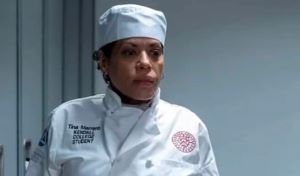
The third season of the acclaimed series The Bear is expected to begin production in late February 2024, setting the table for new adventures and plot lines for the intrepid restaurateurs. In season two, there was a subtle but important subplot that highlighted the benefits and challenges of culinary education for minoritized workers, with two characters—Tina, a middle-aged Latina, and Ebraheim, an older African American man—being sponsored to pursue a culinary certificate at none other than Kendall College. (Yes! That was really us!)
Minoritized individuals are the backbone of the restaurant industry, representing nearly half the workforce. Of the total workforce, 25% are Hispanic, 13% are Black or African American, and 7% are Asian. At the same time, only 6 in 10 chefs and cooks are minorities and 4 in 10 are managers. Additionally, only 1 in 5 chefs and 1 in 3 cooks are female, according to the National Restaurant Association. Overall, women and minorities are poorly represented in leadership positions and still face long-standing biases that relegate them to less prestigious food service settings such as quick service or contract food service (schools, hospitals, etc.) and to more menial roles in the kitchen and restaurant operations. As of February 2023, there is only one Black Executive Chef and a mere 15 Hispanic Executive Chefs at the helm of Michelin-starred restaurants in the US, according to Chef’s Pencil. Only three Black Chefs have been recognized with a star since Michelin began in the US in 2005, and female-led Michelin-starred restaurants account for only 6% worldwide.
Can education make a difference for minorities and women? The Bear’s newly appointed Head Chef Sydney certainly thinks so, paying for Tina and Ebraheim to enroll in Kendall College to prepare them for their roles of the new fine dining restaurant: in the case of Tina, to be Sydney’s right hand as Sous Chef. It makes sense that Sydney, a young African American woman who is a graduate of Culinary Institute of America, would value education as a pathway to advancement. Tina persists in the program and gains skills, confidence and an important acknowledgement from Carmy (the Chef de Cuisine) in the form of the permanent loan of a prestige knife. Ebraheim does not persist (at least not as of the end of season two), but finds another role within the kitchen ecosystem.
To be sure, there are many pathways to success in the restaurant industry. The Bear dramatizes these as well. A budding pastry chef apprentices with a master baker in Amsterdam, and another character stages to learn high-level service at a celebrated Chicago fine dining establishment. Sydney visits with some of Chicago’s most recognized chefs and restaurateurs to learn from their experience how to make sure her new venture succeeds. These pathways are common, and also may be pursued alongside formal education. But it is important to recognize that formal culinary education isn’t the only way and that it may not be for everyone. Ebraheim’s decision to drop out of the program illustrates this, although we wonder how he might have fared if the script had shown him receiving the kind of mentorship and support that is baked into the Kendall College curriculum.
In order to propel minorities and women into higher level positions in the restaurant industry, culinary education needs to do more than build knife skills. That’s why at Kendall College we emphasize leadership and business skills for running or owning a restaurant or other food service outlet. Our hospitality management program similarly prepares students for leadership in the front of the house and in the boardroom. This is reinforced by an extensive experiential component, which allows our students to gain exposure to and learn directly from leading chefs, restaurateurs and hoteliers in stages and internships. Earning a degree (in particular, a Bachelors’ degree) helps graduates build confidence and signals employers of their readiness to take on responsibilities beyond the day-to-day production and service of food and beverages. While graduates may still face obstacles, their education makes them better prepared to overcome them and take advantage of opportunities as they arise.
We are eager to see how the crew at The Bear fares in season three and how characters such as Sydney, Tina, Ebraheim and others develop in the new fine dining environment. Whatever happens, it will shine an intriguing light on the many opportunities and challenges in the restaurant industry that we know and love.
