
NLU and ISPP Showcase Research Excellence at the Illinois Psychological Association Annual Convention
Faculty and students present psychological research, lead professional discussions, and earn statewide awards. See photos at the end.
National Louis University's Illinois School of Professional Psychology (ISPP) made a significant impact at this year's Illinois Psychological Association (IPA) Annual Convention, demonstrating the strength of its academic programs, research initiatives, and commitment to preparing the next generation of psychologists.
ISPP and NLU faculty, alumni, and students were highly visible throughout the convention, leading six professional sessions and presenting 11 research posters on topics ranging from artificial intelligence and mental health to reproductive psychology, trauma, leadership, and clinical practice. The impressive showing reflected both the breadth of scholarly work taking place within ISPP and the university's dedication to advancing the field of psychology through research and thought leadership.
Adding to the university's accomplishments, ISPP students Dheeksha Ranginani and Elena Grechkosei currently serve on the executive board of the Illinois Psychological Association Graduate Association (IPAGS), while ISPP student Emily Chow received an Academic Section Award for her research poster presentation.
Turning Research Into Real-World Impact
For faculty members like Dr. Christina Biedermann, conferences such as IPA provide valuable opportunities to share innovative ideas while amplifying student voices.
"I am proud to showcase the innovative teaching we are doing at ISPP, as well as the support we receive from our administration to do so," Biedermann said. "It was also delightful to have so many students and colleagues in the audience supporting us."
Biedermann presented "Reproductive Deserts: Addressing Doctoral Training in Reproductive Health and Development," a session that explored how future psychologists are being prepared to address critical gaps in reproductive health education and care.
According to Biedermann, the most meaningful aspect of the presentation was ensuring that student perspectives remained at the center of the conversation.
"We had asked students about what they learned in a course I taught on reproductive health and psychology, as well as whether the material had been covered elsewhere and if they felt the material was important to their futures as clinical psychologists," she said. "A student joined us on the panel to talk about her firsthand experience of taking the course and her suggestions for improving it."
Recognition for Emerging Scholars
One of the convention's highlights was the recognition of ISPP student Emily Chow, who earned an Academic Section Award for her poster presentation, "A Corpus Analysis of Trauma Across DSM Editions."
Chow described the award as both unexpected and deeply encouraging.
"I was surprised and honored to receive the Academic Section Award," Chow said. "Research begins with curiosity and often involves uncertainty. Receiving this recognition was encouraging because it showed that an unconventional approach to a familiar psychological topic could generate interest and contribute to meaningful academic discussion."
Chow credited ISPP's culture of academic excellence for helping prepare her for the experience.
"It was a privilege to represent NLU and ISPP," she said. "ISPP has a long tradition of educating and preparing the next generation of psychologists. The department and professors motivate us to challenge ourselves and think critically and independently. I am grateful to be part of an institution that values professional development and the desire to learn."
Like many students presenting at a professional conference for the first time, Chow initially felt intimidated speaking before experienced researchers and practitioners. That concern quickly gave way to meaningful conversations and professional growth.
"Members were very supportive, and the opportunity to exchange ideas with them became a most rewarding experience," she said. "Their interest and insight helped me reflect more deeply about my research."
A Wide Range of Research Topics
NLU and ISPP presentations covered a diverse set of issues shaping modern psychological research and clinical practice, including:
- The role of improv in building cognitive flexibility, connection, and resilience.
- The psychological impact of colorism and implications for clinical practice.
- Artificial intelligence and mental health influencers in clinical psychology.
- Post-traumatic growth and connectedness through games.
- Leadership and advocacy development in psychology.
- Mental health literacy and self-diagnosis through social media.
- Competency restoration for defendants with limited English proficiency.
- Adverse childhood experiences and antisocial personality traits.
- Dementia and homelessness among older adults.
- Postpartum psychosis and criminal responsibility.
- Online dating, communication, and relationship formation.
The breadth of topics reflects ISPP's commitment to addressing emerging societal challenges while preparing students to contribute meaningful solutions through evidence-based research and clinical practice.
Building the Future of Psychology
For both faculty and students, participating in professional conferences represents far more than presenting research findings. It is an opportunity to contribute to ongoing conversations that shape the future of psychological science.
"Producing scientific knowledge and participating in greater dialogues is part of what makes being a clinical psychologist endlessly interesting," Biedermann said. "My students and I might be thinking about one part of a question, while colleagues elsewhere are thinking about another part. Together, we learn more."
That collaborative spirit is one of the reasons ISPP encourages faculty and students to share their work with the broader psychology community. Conferences provide opportunities to receive feedback, build professional networks, spark new ideas, and engage with experts from across the field.
As Chow reflected, "Research should not remain confined to classrooms. Conferences are opportunities to share ideas, receive constructive feedback, and gain different perspectives that may not be found elsewhere. They are a special chance to foster growth as emerging professionals."
The strong presence of NLU and ISPP at this year's Illinois Psychological Association Annual Convention serves as a testament to the university's commitment to scholarship, innovation, and preparing students to become leaders in psychology and mental health professions.
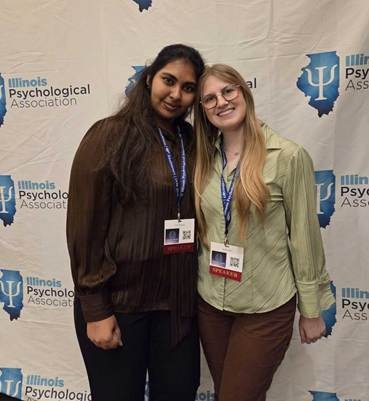
“Psychology and Improv: Building Cognitive Flexibility, Connection, and Resilience”
Presented by D. Joyce Mojica, Psy.D. (ISPP alum), Aliya Persaud, M.A., & Marie Eddy, M.A.
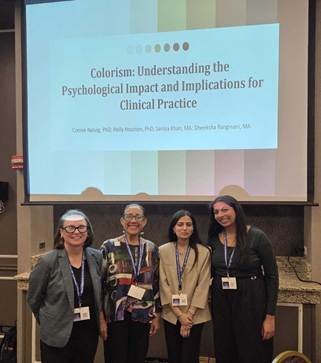
“Colorism: Understanding the Psychological Impact and Implications for Clinical Practice” Presented by Connie Natvig, Ph.D.; Holly Houston, Ph.D.; Saniya Khan, M.A.; & Dheeksha Ranginani, M.A.
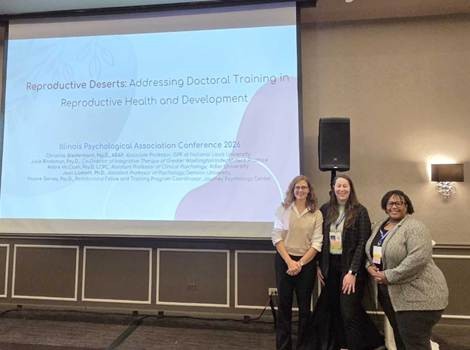
“Reproductive Deserts: Addressing Doctoral Training in Reproductive Health and Development” Presented by Christina Biedermann, Psy.D., ABAP; Julie Bindeman, Psy.D.; Abbre McClain, Psy.D., LCPC; Jean Lamont, Ph.D.; Maeve Garvey, Psy.D.
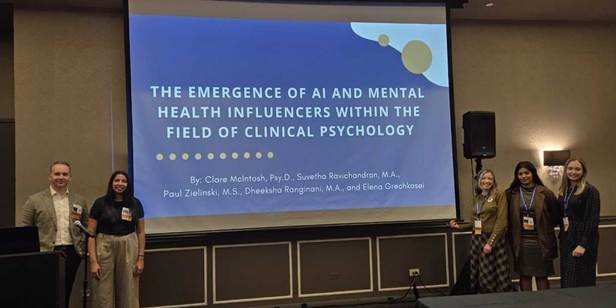
“The Emergence of AI and Mental Health Influencers Within the Field of Clinical Psychology” Presented by Clare McIntosh, Psy.D.; Suvetha Ravichandran, M.A.; Paul Zielinski, M.S.; Dheeksha Ranginani, M.A.; & Elena Grechkosei
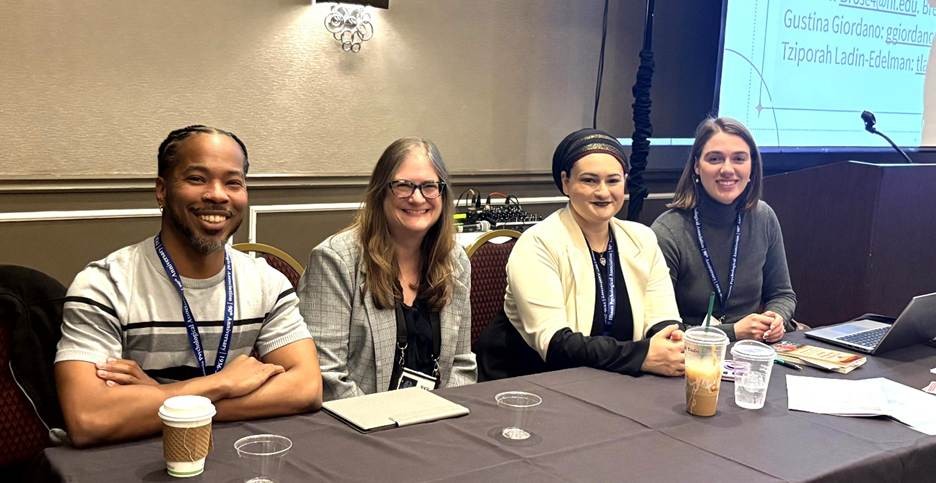 “The Role of Games in Fostering Post-Traumatic Growth and Connectedness”
Presented by Anissa Rivers, Psy.D., Breon Rose, Ph.D., Gustina Giordano, M.A, & Tziporah Ladin-Edelman, M.A.
“Leadership and Advocacy: Exploring Equitable Ways to Develop Leadership and Advocacy Skills in Clinical Psychology”
Presented by Leah Horvath, Ph.D. & Misty Mann, Psy.D.
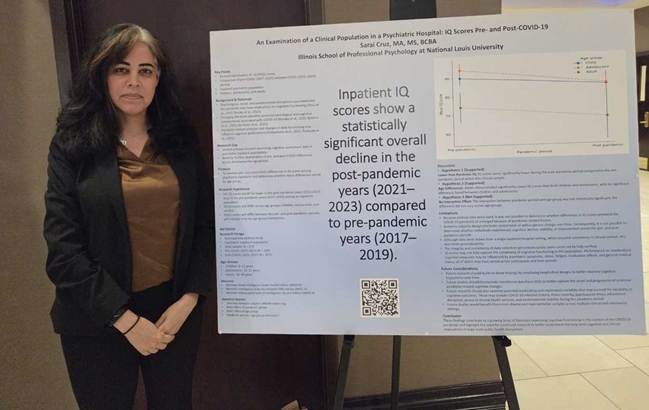 “Inpatient IQ scores show a statistically significant overall decline in the post-pandemic years (2021-2023) compared to pre-pandemic years (2017-2019)”
Presented by Sarai Cruz, M.A., M.S., BCBA
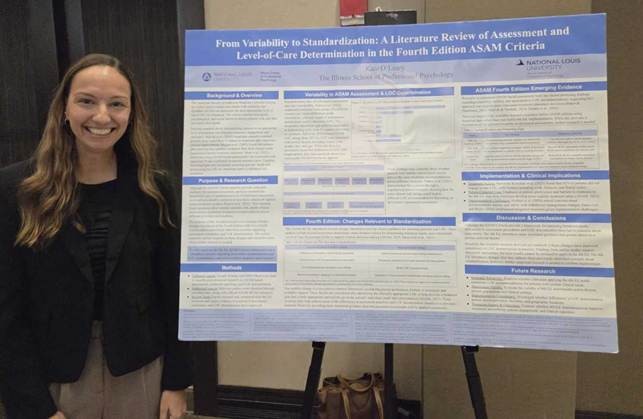
“From Variability to Standardization: A Literature Review of Assessment and Level-of-Care Determination in the Fourth Edition of ASAM Criteria”
Presented by Kate O’Leary
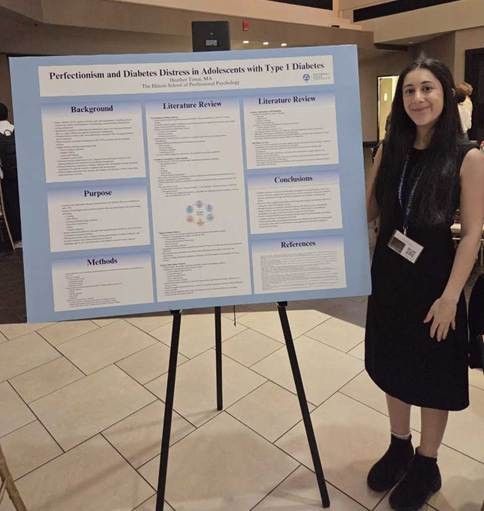
“Perfectionism and Diabetes Distress in Adolescents with Type 1 Diabetes”
Presented by Heather Toma, M.A.
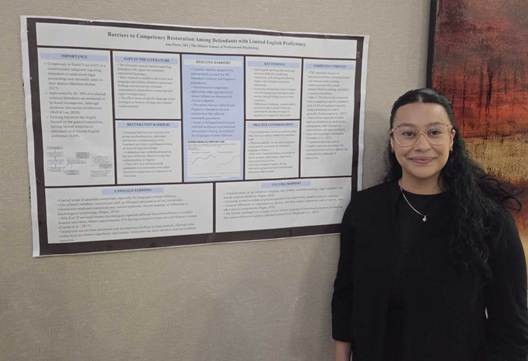
“Barriers to Competency Restoration Among Defendants with Limited English Proficiency” Presented by Ana Perez, M.A.
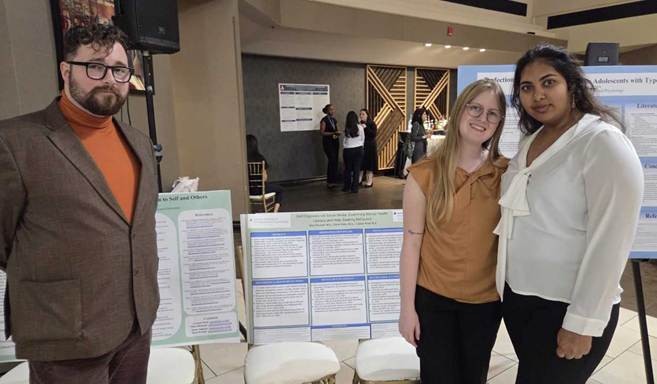 “Self-Diagnosis via Social Media: Examining Mental Health Literacy and Help-Seeking Behaviors” Presented by Aliya Persaud, M.A., Marie Eddy, M.A., & Connor Pond, M.A.
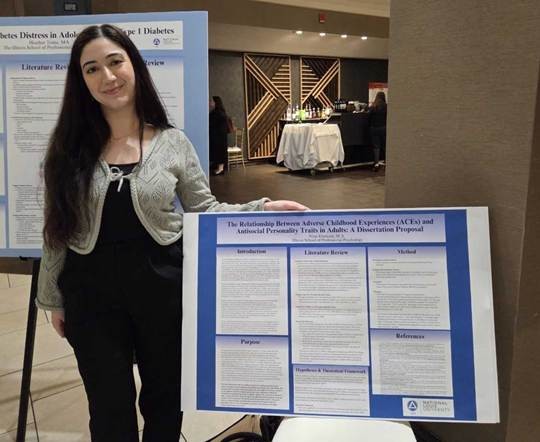
“The Relationship Between Adverse Childhood Experiences (ACEs) and Antisocial Personality Traits in Adults: A Dissertation Proposal” Presented by Nina Khawam, M.A.
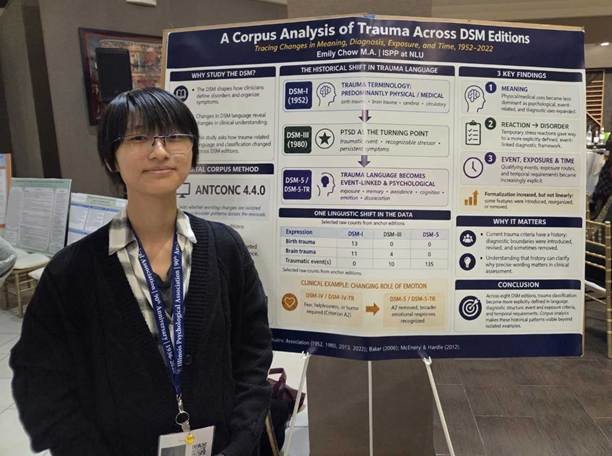 “A Corpus Analysis of Trauma Across DSM Editions” Presented by Emily Chow, M.A.
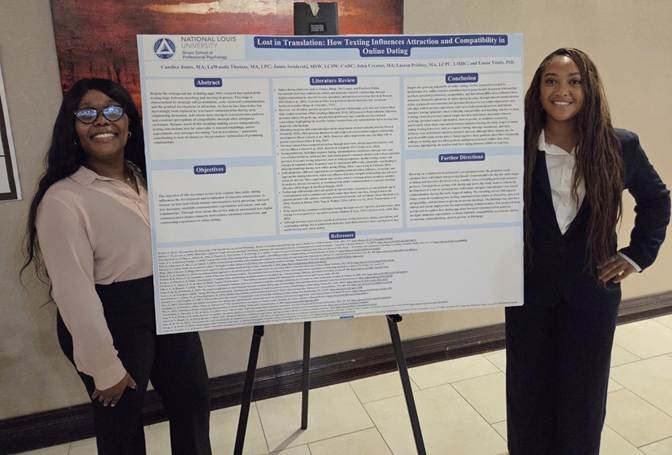 “Lost in Translation: How Texting Influences Attraction and Compatibility in Online Dating” Presented by Candice Jones, M.A.; LaWanda Thomas, M.A., LPC; Jamie Swiderski, MSW, LCSW, CADC; Jolea Crearer, MA; Lauren Prieboy, MA, LCPC, LMHC; & Emese Vitalis, Ph.D.
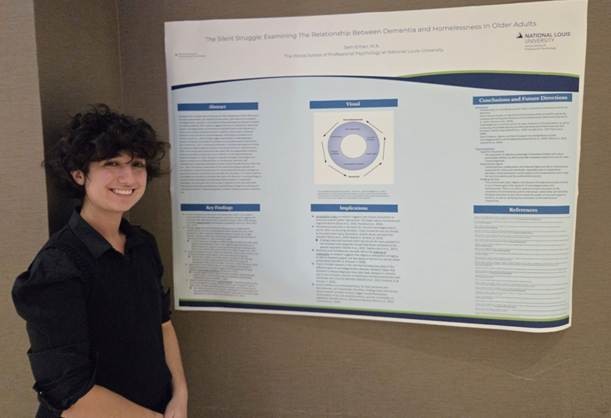 “The Silent Struggle: Examining the Relationship Between Dementia and Homelessness in Older Adults” Presented by Sam Erhan, M.A.
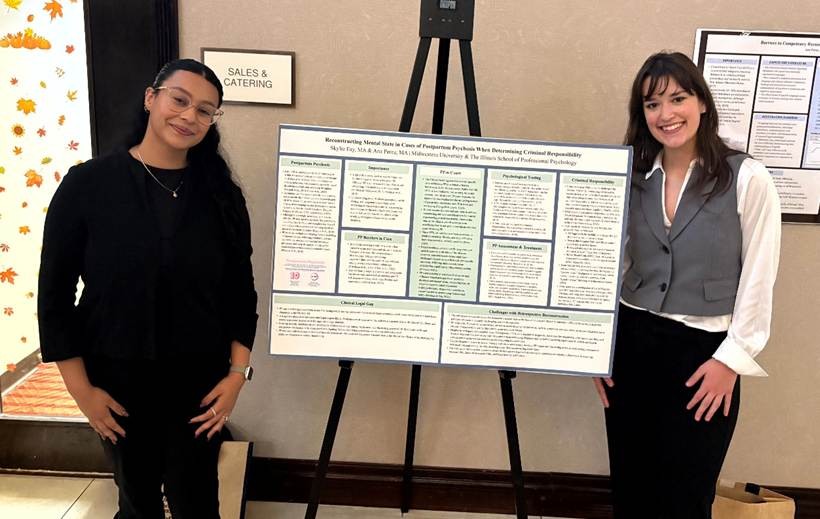 “Reconstructing Mental State in Cases of Postpartum Psychosis when Determining Criminal Responsibility” Presented by Skylar Fay, M.A., & Ana Perez, M.A.
