Community Builder
Faculty develop the skills to create a safe, inclusive, and equitable learning community where each individual student can flourish.
- Faculty foster an equitable and inclusive learning community by applying culturally responsive pedagogy to ensure that students' identities are authentically represented, recognized, and valued.
- Faculty leverage the learning opportunities of social, collaborative, and peer interactions when designing and facilitating learning experiences. (Jump to Section)
- Faculty differentiate and individualize the learning experience based on students' abilities and needs to provide multiple pathways for students to engage with material, demonstrate understanding, and achieve success. (Jump to Section)
1) Faculty foster an equitable and inclusive learning community by applying culturally responsive pedagogy to ensure that students' identities are authentically represented, recognized, and valued.
Checking Our Biases
Cognitive Bias can impact a student's ability to feel competent in a specific area. Cognitive bias occurs when our thoughts and judgments are affected by our values, personality, previous experiences, or beliefs. Our decision-making process may lack objectivity causing our brain to experience difficulty accepting anything that challenges what it believes in or what it finds unfamiliar. A cognitive bias can prevent faculty from approaching students equitably. They can also prevent students from feeling competent and can be a barrier to success.
Use the drop-downs below to explore three different types of cognitive biases. Create a plan to overcome these biases, or seek an equity mentor to help. Doing so will ensure that faculty are doing everything in their power to foster an equitable and inclusive learning environment for themselves, their colleagues, and students.
The tendency to search for, interpret, favor, and recall information in a way that supports our beliefs. In one study, researchers discovered that individuals tend to search for information closely linked to their beliefs to support their reasoning toward subjects. This thinking pattern can be harmful because it leads us to believe false information and reinforce our personal biases and stereotypes. It prevents us from looking at situations objectively and making decisions accordingly.
- A faculty member has a strong belief that students who participate frequently in class are more engaged and more committed to learning. When grading participation or evaluating student performance, the faculty member gives more positive attention to students who speak often, while overlooking quieter students who may be deeply engaged through written work, reflection, or small-group discussion.
- A faculty member believes that students from a particular academic background, major, age group, or prior institution tend to struggle in their course. When a student from that group performs poorly on an early assignment, the faculty member sees it as confirmation of that belief rather than considering other factors, such as unclear instructions, limited prior exposure to the material, outside responsibilities, or the need for additional support.
- A faculty member has had past negative experiences with students using AI tools inappropriately. As a result, when a student submits unusually polished writing or makes a strong improvement from one assignment to the next, the faculty member assumes the student must have misused AI rather than first gathering more information, reviewing the student’s process, or considering that the student may have used feedback, tutoring, drafting, or legitimate learning strategies.
- A student believes misinformation on a key topic in your course because it favors their perspective.
- A student has a pre-existing belief that they are not good at a specific skill. They fail the first assignment in the course. Instead of thinking they did not study enough, they use confirmation bias to confirm their belief that they will never do well in the subject.
- Jones, M., & Sugden, R. (2001). Positive confirmation bias in the acquisition of information. Theory and Decision, 50(1), 59-99.
The tendency to overestimate the outcome of the event after it has already happened. Some researchers refer to this as the "I-knew-it-all-along" phenomenon. This may influence us to think that we can accurately predict the outcome of other future events.
- A faculty member reviews poor results from a class assessment and thinks, “I knew students were not going to understand this concept,” even though students seemed engaged during the lesson. This may prevent the faculty member from carefully examining which parts of the instruction, practice, or assessment design contributed to the outcome.
- A faculty member has a student stop attending class after missing several assignments and thinks, “I knew that student was going to disengage.” This assumption may make the outcome seem inevitable, rather than prompting reflection on whether earlier outreach, flexibility, or support could have helped.
- A faculty member receives negative feedback on a course activity and thinks, “I knew students would not like this assignment.” Instead of using the feedback to refine the assignment, the faculty member may view the result as predictable and miss an opportunity to improve instructions, scaffolding, or alignment with course goals.
- A student continues to put little effort into their work after failing the first assignment. They feel as if there is no reason to increase efforts since they know they are going to fail.
- A student earns a low grade on an exam and says, “I knew I was going to do badly anyway,” even though they felt somewhat prepared before taking it. Looking back, they overestimate how predictable the outcome was and may miss the chance to identify specific study strategies that could improve future performance.
- A student receives critical feedback on a paper and thinks, “I should have known the professor wanted something different.” Instead of reviewing the rubric or asking clarifying questions for the next assignment, the student assumes the expectations were obvious all along.
- Arkes, H. R., Faust, D., Guilmette, T. J., & Hart, K. (1988). Eliminating the hindsight bias. Journal of applied psychology, 73(2), 305.
The tendency to use the first piece of information we encounter, often without realizing it, as the basis for future judgments and decisions. This can result in overvaluing some aspects of a situation and undervaluing others.
Faculty Examples:
- A faculty member forms an early impression of a student based on the student’s first assignment, first class comment, or first email. That initial impression may influence how the faculty member interprets the student’s later work, even when the student improves or shows stronger understanding.
- A faculty member notices that a student misses the first week of class and anchors on the idea that the student is disengaged or unreliable. Later, the faculty member may overlook evidence that the student is trying to catch up, participating meaningfully, or managing outside responsibilities.
- A faculty member uses a student’s prior academic record, placement score, writing sample, or program background as the main basis for judging the student’s ability. This may cause the faculty member to underestimate the student’s growth, motivation, or potential in the current course.
Student Examples:
- A student is a novice in your course but has a strong perspective based on little information. They are dismissive of new information on the topic.
- A student receives a low score on the first quiz and begins to see themselves as “bad” at the subject. Even after improving on later assignments, they stay anchored to that first grade and underestimate their progress.
- A student hears one peer’s strong opinion during a class discussion and uses that comment as the main basis for their own position. They may give less attention to course readings, evidence, or alternative perspectives introduced later.
- Brewer, N. T., & Chapman, G. B. (2002). The fragile basic anchoring effect. Journal of Behavioral Decision Making, 15(1), 65-77.
Building a Classroom Culture of Inclusion
Faculty need to be vigilant in using practices that create and maintain a culture of inclusion within a learning community. Below are some practices that you can use every day to guide you.
 |
Validate experiences of Learners. |
-
- Acknowledge different ways of knowing, different languages, and different levels of knowledge or skill among learners.
- Allow students to reflect on and incorporate their cultural perspectives.
|
Use collaborative and cooperative learning to promote perspective sharing. |
-
- The outcome of the group provides multiple perspectives (each person’s culture and experiences add to the group, and each group member has a unique contribution to make to the group because of their resources, role, or responsibilities).
- Include peer-to-peer interactions in task design - peer reviews to provide multiple perspectives.
 |
Emphasize the human purpose of what is being learned. |
-
- Create learning goals (outcomes and objectives) and assessments written in student-friendly language.
- Identify student goals at the beginning of the learning experience.
- Create examples that honor the relationship to the learners’ personal lives and current situations.
- Use storytelling, vignettes, case studies, and annotations based on cultural diversity.
 |
Create a safe, inviting, and inclusive course environment. |
-
- Clear syllabus outlining expectations.
- Create inclusive participation guidelines.
- Use visual images, names, and language reflective of the student population.
Think-Pair-Share allows students to collaboratively build knowledge. The collaboration can be done in person, via Zoom, in a shared document, or using other learning technologies. The method in which they collaborate is given to the students. To further support inclusive pedagogy, the method in which students submit their collaboration can differ from a visual representation, a written paper, a presentation, or another method of sharing ideas.
- Establish the learning material for the activity. Think about providing multiple resource types such as videos and readings.
- Identify what the groups share with the larger class to contribute and build a greater understanding of the learning goals.
You may find other helpful activities on the CTLE's High Impact Teaching Strategies page or the K. Patricia Cross Academy.
Differentiation as an Equity Practice
Differentiation addresses differences in student background, preparation, interests, and strengths by offering a variety of learning pathways within the same learning experience that differ in terms of content, process, and product. It helps ensure that we're meeting each student where they are, rather than expecting that everyone learns in the same way. The approach rests on five fundamental principles:
- Learning isn’t simply a linear process in which a lack of something (knowledge, experience, or awareness) gives way to mastery of something.
- Rather than distinguishing students on the basis of pace (i.e., students who complete activities or achieve mastery faster are “more advanced”), we would do better to focus on depth of understanding or proficiency with particular skills.
- Active and collaborative learning—that is, learning by doing—is, in many instances, the most effective way to teach key concepts or skills.
- Team-based learning can leverage the power of peer mentoring and can enhance students’ collaboration skills, including the ability to pool knowledge, resolve differences, reconcile conflicting perspectives, delegate responsibilities, and ensure accountability.
- Subject matter experts and instructors aren’t simply content area specialists or evaluators of student work, but, rather, designers of learning experiences, through which all students have the opportunity to succeed.
Differentiation also promotes student agency, which refers to learning through activities that are meaningful and relevant to learners, driven by their interests, and often self-initiated with appropriate guidance from instructors. To put it simply, student agency gives students a voice and often, choice, in how they learn.
There are three intersecting components of learning experience design through which we can intentionally plan for differentiation. Think about the relationship between these three components and the three principles of Universal Design for Learning Guidelines: engagement, representation, and action and expression.
|
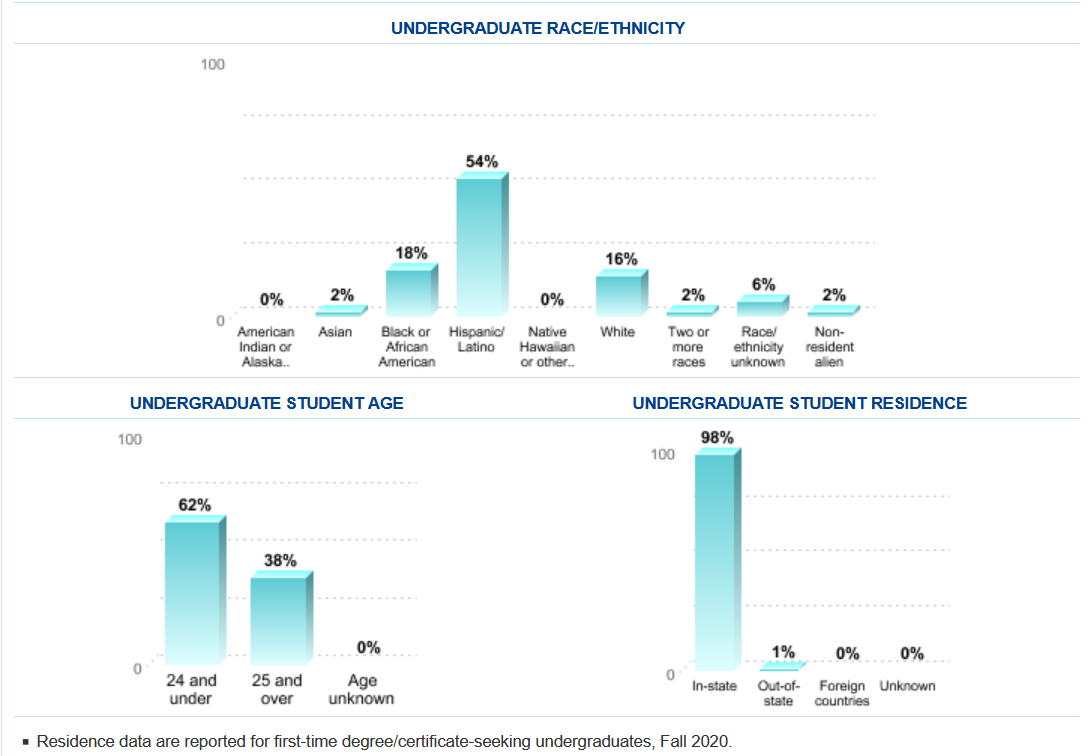
Diverse Student Body
2) Faculty leverage the learning opportunities of social, collaborative, and peer interactions when designing and facilitating learning experiences.
Creating an Inclusive Environment
Inclusive Pedagogy is a student-centered approach that identifies diversity within a learning environment as a strength to be leveraged. A key principle is that all students and instructors enter the classroom with unique experiences which creates a collaborative learning environment. Varied learning methods are offered to and created by all students in partnership with faculty to leverage personal strengths and acknowledge student differences.
Use each drop-down below to explore actionable practices that can be incorporated into your classroom.
- Welcome students with a message acknowledging that each student has a variety of strengths and diverse perspectives that inform intellectual exchange and engagement.
- Terms used for people or groups should be accurate and inclusive of various identities.
- Consider creating vocab lists for complex terminology.
- Reflect often on which students are not participating. What are potential barriers? Reach out and offer support early in the term.
- Review the User Progress tool in D2L. Are there any patterns in logins or frequent logins with no submissions? This can indicate instructional support is needed. Learn more about the User/Class Progress tool in D2L here.
- Familiarize yourself with the available supports that NLU offers. The Learning Support team offers essay drop-off, one-on-one tutoring, as well as free learning tools like Grammarly and Tutor.com. Visit the Learning Support page.
- Bias can occur in a variety of ways. Race, age, sexual orientation, ability, etc. can impact the way you view a student. Minimize assumptions and ask students their preferences. Open dialogue is key.
- Identify your own implicit bias and create a plan to minimize the impact on students.
- Complete Harvard's Implicit Bias test here.
- Get to know your students and create opportunities for them to learn about each other.
- Don't just inquire about surface culture such as holidays and dress, but dig deeper to understand their view on Collectivism vs. Individualism and the types of stories/legends their families tell.
- Recognize all students are individuals with their own unique set of skills and experiences.
- Take an interest in something they care about before expecting them to take an interest in what you care about.
- Discuss expectations surrounding communication. Be sure to think through timelines for responding to each other.
- Root the norms and expectations in the reality that productive, safe learning environments require tolerance, empathy, and respect.
- Clearly identify how students will achieve targeted learning goals and demonstrate learning.
- Ask students to identify the types of activities that engage/motivate them and their preferences regarding feedback.
3) Faculty differentiate and individualize the learning experience based on students' abilities and needs to provide multiple pathways for students to engage with material, demonstrate understanding, and achieve success.
Differentiated Learning
Faculty who excel in this sub-domain begin from an assumption that students are capable and bring valuable strengths, experiences, and perspectives into the classroom. They deliberately learn about their students’ goals, backgrounds, and needs—through early surveys, check-ins, and observation—and then actually use that information to shape instruction. Differences in preparation, language, or learning preferences are treated as assets to build on, not problems to fix, and the aim is always to maintain high expectations while offering varied supports and pathways to get there.
In their course design and daily teaching, these faculty provide multiple ways for students to access content, engage with activities, and show what they know. Key ideas are presented in different formats—readings, videos, demonstrations, visuals, guided notes—so students can find entry points that make sense for them. Class sessions and online work include a mix of participation structures (individual work, small groups, whole-class dialogue, written and verbal contributions) so that students with different communication styles can engage meaningfully. When it comes to demonstrating understanding, students may be offered structured choices—papers, presentations, projects, media artifacts, applied tasks—with clear criteria that ensure all options still align to the same learning outcomes.
These faculty also scaffold complex tasks and gradually release responsibility over time. Larger projects are broken into manageable stages with models, templates, and guiding questions at the outset; as students gain confidence and skill, supports are intentionally reduced. They build in reasonable flexibility—checkpoints, occasional extensions, targeted practice opportunities—and connect students to tutoring, writing support, accessibility services, and other resources. Throughout the term, they pay attention to assessment data and participation patterns, using that evidence to adjust pacing, re-teach concepts in new ways, or provide additional supports for individuals or groups. Underlying all of this is a commitment to equity and inclusion: differentiation is used to remove unnecessary barriers and expand opportunity, so that more students can fully participate, persist, and succeed.
- Choice in How to Demonstrate Learning
- For a major assignment, students choose from several formats (e.g., traditional paper, recorded presentation, infographic, lesson plan, brief policy memo), all aligned to the same core outcomes.
- The instructor provides a common rubric applied across formats and examples of what successful work looks like in each option.
- Layered Access to Course Content
- Weekly materials include a short overview video, a written summary, assigned reading(s), and a graphic organizer or concept map.
- Students are encouraged to use the combination that best supports their understanding; all formats reinforce the same key ideas.
- Scaffolded Major Projects
- A research or applied project is broken into stages: topic proposal, annotated bibliography/resource review, outline or design plan, and final product.
- Each stage includes clear instructions, examples, and short, targeted feedback that helps students refine their ideas before moving on.
- Varied Participation Structures
- Class sessions include a mix of think–pair–share, small-group tasks, online discussion boards, and whole-class debriefs.
- Students who are quieter in large groups have structured ways to contribute (e.g., written responses, chat, small-group reports, polling tools).
- Targeted Supports for Skill Gaps
- The instructor identifies common skill gaps (e.g., academic writing, basic statistics, technology use) and builds in optional mini-modules, tutorials, or resource links.
- Students who need more support can engage with these without being singled out; advanced students can move more quickly to extension tasks.
- Flexible Pathways Within a Unit
- During a unit, the instructor provides “core” tasks everyone completes and “extension/choice” tasks for those who want to go deeper or practice in different ways.
- Students might choose between applying a concept to a case study, analyzing a data set, or designing a brief intervention or product.
- Responsive Re-Teaching and Alternate Approaches
- After a formative assessment shows many students missed a key concept, the instructor re-teaches it using a different approach (e.g., concrete examples, visual models, interactive activity) and offers an additional short practice task.
- Students struggling individually are invited to office hours or small-group sessions focused on that specific concept.
- Collaborative Grouping with Purpose
- When using group work, the instructor thoughtfully forms groups that balance strengths, language backgrounds, and experience levels.
- Roles and expectations are clearly defined so that all students can contribute meaningfully and benefit from peer support.
- Partnership with Student Support Services
- The instructor includes information about tutoring, writing support, accessibility services, and counseling on the syllabus and in announcements.
- When patterns of difficulty emerge, they normalize help-seeking and proactively encourage students to connect with these supports.
- Reflection on Learning Choices and Strategies
- Students periodically reflect on which learning activities, formats, or strategies help them most, and set goals for how they will use those approaches in future units.
- The instructor uses these reflections to refine how they structure choices and supports in the course.
References
Florian. (2010). Preparing teachers for inclusive education: using inclusive pedagogy to enhance teaching and learning for all. Cambridge Journal of Education, 40(4), 369–386. https://doi.org/10.1080/0305764X.2010.526588
Hammond, Z. L. (2015). Culturally responsive teaching and the brain. Corwin Press.