
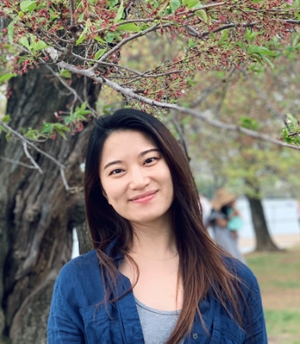
Hyeju Han, Ph.D.
Associate Professor
Curriculum and Instruction
National College of Education
- Graduate-level courses in Curriculum and Instruction
CIC 511: Designing Curriculum for 21st Century Skills
CIC 521: Developing Content Area Curriculum
- Graduate-level courses in Reading and Literacy Education
RLP 540: Teaching Content Area Literacy at the Middle and Secondary Level
Curriculum and Instruction, Reading and Literacy Education
Ph.D., Language, Literacy, and Culture; Instruction and Learning, University of Pittsburgh
M.A., Elementary Education, Ewha Womans University
Dr. Hyeju Han brings her expertise in K-12 digital learning with a Ph.D. from the University of Pittsburgh in the Department of Teaching, Learning, and Leading. Dr. Han’s research interests center on critical digital literacy practices and instructional approaches in elementary and secondary schools, online reading comprehension, and teacher preparation and teacher learning. More recently, she has studied middle school students’ critical digital literacy as they examine a current issue of interest—gentrification—in a digital space.
Dr. Han worked as an elementary school teacher, university instructor, and research coordinator in various educational settings for culturally, linguistically, and ethnically diverse students. Her passions include creating effective and engaging learning spaces both in-person and online and developing digital learning environments through a lens of social justice and equity.
My primary research interests center on multisource reading comprehension, digital literacies, literacy practices and instructional approaches in elementary and secondary schools. Most recently, my research has focused on inquiry-based approaches to working with digital media and current social justice issues such as gentrification. In particular, I focus on young students’ critical digital literacy practices, which I broadly frame as social practices that are related to readers’ culture, ways of being, and critical awareness of the text, power, and ideology. As educators, I believe that our job is to guide our students to think critically and to engage with and interrogate texts in meaningful ways by acknowledging students’ diverse experiences, belief systems, identities.
