
Facilitated By: Sara Leeman & Amy Hall, University Library
Supporting and developing our students’ sense of academic integrity is about so much more than just plagiarism policies and APA style. In this synchronous zoom session and accompanying online guide, we’ll explore key concepts, essential practices, and available resources for discussing and encouraging academic honesty in the classroom.

Facilitated by: Kristin Lems
In this one hour zoom session, you'll have a chance to listen to music and songs, sing, draw, and write a new verse of a song, after you learn a little about the stunning ways music nurtures, inspires, and activates the brain. No musical skill required - just a belief in the power of music!
Session Recording | Slides available upon request
Facilitated by: Liz Teahan & Martin Wesley
As faculty look to add engaging activities to their courses, many have begun using “Pro” versions of free software. This session will introduce you to the tools in the Pro (paid) version of Padlet/Sli.do to help you improve your skills or help you determine if the paid version is worth it.
Facilitated by: Neal Green & Alicia Meno
Planning to keep students engaged during class starts long before the actual session. Before we can empower students to achieve at a high level academically, we must spend time cultivating relationships. Educators knew before the COVID-19 pandemic how vital social and emotional aspects are to student success, and even more so now in a world of remote and online learning. In addition to the social-emotional learning components explored during the session, we will cover alternative digital strategies that support student engagement and help you be a successful online and remote teacher.
Facilitated by: Uzoma Obidike
LinkedIn is the world’s largest professional network with nearly 800 million users. NLU students are required to create LinkedIn profiles and connect with faculty as part of the CAR/BRV curriculum. Therefore, it is essential for NLU faculty to utilize the platform as a model for our students and to further engage with them beyond the classroom. In addition, using LinkedIn to promote program and institutional initiatives, as well as individual accomplishments, will increase NLU’s presence across a broader network.
In this workshop, you will learn:
- Key components to include on your LinkedIn profile to showcase your personal and professional brand
- How to thoughtfully engage with current students, alumni, and the NLU community to establish and nurture long-lasting relationships
- The best types of content to share on your newsfeed to encourage meaningful conversations amongst your LinkedIn connections
Have you been hearing about DTENs and their role in bimodal classes? Did you not understand that last sentence and are now concerned? DTEN is a learning tool that you may encounter in your classroom. It is a large touchscreen monitor that works alongside an existing TV mounted in your room. This tool will help you run "bimodal" class sessions with on-ground and remote participants simultaneously. We're hosting a couple training sessions on these devices during week 3 to the Winter Term.
Facilitated by: Joseph Levy, Janice Nilsen, & Rebecca Albertini
Rubrics: a popular, course-embedded tool for grading and assessment. While many folks look to employ rubrics, they may be doing so without knowing how best to determine rubric type (yes, there’s multiple types!), design, or how best to use and leverage data collected from rubrics. This session will describe the nature, benefits, and types of rubrics, as well as identifying considerations for design and use. Implications for grading, assessment, and classroom/instructional practices will be presented, with ample time for discussion. In addition to Q&A, time will be afforded for reviewing and workshopping rubric examples folks may bring to the session.
Facilitated by: Hadea Hummeid
This presentation considers and explores the benefits of organized work culture. The purpose of this is to open a dialogue about how programs can transition new faculty into the institution.

Faculty are welcome to attend either session, regardless of college affiliation. Content will be the same for both sessions.
Tuesday, January 11, 2022 at 2:00pm Central Time (hosted by the UGC) Session Recording | Remote Instructor Orientation Slides (1/11/22)
Friday, January 14, 2022 at 11:00am Central Time (hosted by the CTLE)
This zoom session will cover basics and best practices of remote/virtual (synchronous online) instruction at NLU, while modelling some student engagement strategies for the virtual classroom. Instructors new to remote, as well as those wanting to develop their practice, are welcome. This workshop will be recorded and shared for those who cannot attend.
Interested in becoming more aware about concepts of Social Justice? Want to share space with other individuals passionate about Social Justice?
Announcing the return of the Social Justice Institute here at NLU! Over the course of the next month and a half, we will be offering 7 sessions to help increase competency in Social Justice concepts and help you improve as a leader!
January 19th – Day of Racial Healing
11 AM – 1 PM
For more details reach out to Cindy Danzell at cdanzell@nl.edu
January 26th – Implicit Bias
4 PM – 6 PM CT
February 2nd – Cycles of Socialization
4 PM – 6 PM CT
February 9th – What is Social Justice?
4 PM – 6 PM CT
February 16th – What is Allyship?
4 PM – 6 PM CT
February 23rd – Exploring Gender
4 PM – 6 PM CT
March 2nd – Journaling for Justice
(leading with a social justice lens)
4 PM – 6 PM CT
While we encourage participation in all workshops, we understand that you may not be able to make it every single week. As a result, students who complete 5 out of 7 will have completed the program and will receive graduation cords, a certificate and a pin.
Staff, faculty and other members of the NLU community who complete 5 out of 7 workshops will also be considered to have completed the program and will receive a certificate and pin.

Any questions about social justice programming or initiatives?
You can email Jordan Colon at jcolon8@nl.edu for any questions regarding any of these events. The events can be found in Eagle Life and participants will be emailed zoom links each week!
Strengthen your research toolkit - Come learn about Dedoose! Dedoose is an affordable, easy-to-use program for analyzing qualitative and mixed methods data; it’s often used for collaborative projects. This introductory webinar will be given by a Dedoose representative for NLU only. The session will start with a basic overview of Dedoose, including some of the advantages of how this web-based application can support qualitative and mixed methods research analysis completely online. While this session will be generalized, we will show you how to import documents, excerpt and code sections of text, and touch on how to bring your analysis to life with easy-to-use charts, graphs, and filters. We will also briefly discuss some mixed methods research topics and how to incorporate mixed methods dimensions into your project with Dedoose. If you would like to explore Dedoose prior to the session or have it so that you can follow along on it during the webinar, you can read about it and get a 30-day free trial of it here. Faculty, Staff, and students are encouraged to attend.
Valerie Walker and Robyn Moncrief, Assistant Professors in the Undergraduate College, spent the fall quarter teaching in the bimodal modality. In this workshop, they’ll share best practices and guidance for possible scenarios one might confront.
Session Recording | (PDF)
Special Guest:
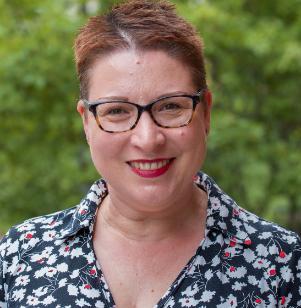
Cate Denial, Bright Distinguished Professor of American History, Knox College
What does it mean to teach with kindness? How do we weave compassion into our policies, assignments, and grading practices? This keynote will focus on the three things that make up a Pedagogy of Kindness: justice, believing students, and believing in students. We'll talk about practical tips for increasing kindness in and out of the classroom, and weave in periods of self-reflection on our own experiences with compassion in educational settings. You'll leave with concrete tips for creating a vigorous kindness in your teaching, as well as for taking care of oneself while doing this work.
Facilitated by: Kamilah Wilson, Assistant Professor, UGC, and Lisa Downey, Associate Dean, UGC
Come join the Undergraduate Early Childhood Education faculty for a crash course on competency-based education. We will also share details about an exciting pilot the team delivered over the summer and fall of 2021 as well as a brief glimpse into what we are planning for competency-based programming in UG Educator Preparation next year.
Facilitated by: Rachel Waymel, Assistant Professor, UGC
Grammarly is an amazing tool that helps writers learn and navigate writing English in academic and professional spaces--if you know how to use it! Grammarly's flexibility in adapting to a range of writing styles and tones by changing settings in its Writing Goals can prompt students to think critically about how purpose and audience impact communication choices, and bring us into a larger discussion of the role of language and style within effective communication. Join us for an introductory walk-through and open discussion of how to leverage Grammarly in writing instruction and feedback within the college classroom, with particular focus on ways to value multiple Englishes and support language learning.
Facilitated by: Bilge Cerezci, Assistant Professor, NCE
In order for modeling to be effective, it is important that it goes beyond simply demonstration of what to do or students sharing ideas for what to do. Effective modeling incorporates reviewing, reflecting, and practice. In this session, we will share, review and reflect on some modeling strategies and discuss how they can be applied in different fields.
Facilitated by: Angela Elkordy, Assistant Professor, NCE
This session explores visual representations, cognitive tools, and protocols to support thinking, specifically to develop learner metacognition. In an interactive session, we will share and discuss instructional strategies and tools that shape and scaffold various modes of thought, focusing on translating findings from the cognitive and learning sciences.
Facilitated by: Joseph D. Levy, Executive Director of Assessment and Accreditation, and Lynessa Rico, Assistant Professor, SBIT
What if we told you there are multiple ways to not only know but quantify the extent students are understanding what you're teaching and engaging in your course? Would you like to know success strategies and tips for accessing such information, adjusting instructional approach, and collaborating as faculty to support student success without having to wait until the end of course data? Tune in to our presentation on formative assessment where, after Dr. Joe Levy gives a brief primer of the topic and data available, Dr. Lynessa Rico will share a case study for how she increased learning, completion, and retention outcomes for her program through faculty engagement and formative data expectations. Ample time will be allotted to allow for conversation and reflection for application, as well as Q&A.
Facilitated by: Gloria McDaniel-Hall, Assistant Professor, NCE
Culturally Relevant Teaching and Learning Standard A calls for us to become more self-aware and in addition more aware of our relationships with our students and their backgrounds and identities. This can be a difficult task in some cases because of: the limited time we have, the need to cover mandatory content, and the fact that establishing a level of trust is necessary. During this session, we will share strategies that we have used to create trust and vulnerability and in addition, we will share ideas that will help us better address this foundational standard within our individual courses.
Facilitated by: Renee Gugel, Assistant Professor, NCE
Are you looking for new and exciting ways to present current, research-based teaching and learning practices to your students? The “Inspire Teaching and Learning” portal offers free, on-demand, personalized modules on over eighty topics ranging from classroom procedures, behavior management, recognizing bullying behaviors, authentic assessment, parent communication, and so much more. NLU students have shared how the modules have not only helped them learn new strategies but also how they have incorporated the modules into professional learning in their buildings. In addition to interactive videos, the modules include coaching guides, transcripts, and supplemental resources. We’ll also briefly discuss the “Harmony” SEL platform and the library of free online professional development webinars.
Facilitated by: Antonio Tovar, Assistant Professor, UGC
This session will provide an overview of how culturally responsive educators can connect academic concepts to the everyday lives of their students. It will include strategies that enhance and make learning more engaging.
NLU Annual Conversation on Scholarship Trends 2022
This year's topic is Public Scholarship: Conceptions and Actions. This event will kick-off Research Month at NLU!
2023 Teaching & Learning Symposium
The Center for Teaching and Learning Excellence (CTLE) is proud to bring you the 2023 Teaching & Learning Symposium. Join your colleagues in the spirit of innovation to review the past year's equity work and use that as a launchpad into next year's pedagogical experimentation. Join us for a keynote and discussion on June 9, 2023 from Noon - 2:00pm (CST).
AI Tools and Support Dialogue
In this session, we'll introduce chairs and deans to a host of AI tools that students might be using - and some that faculty could be using. We'll also share in dialogue about how to guide faculty conversations about AI tool use. Scenarios will be presented for discussion, but if you have a scenario you would like to workshop with your peers, please bring that as well.
Tentative Agenda:
- Reviewing useful AI tools
- Q&A
- Scenario 1 presentation and discussion
- Scenario 2 presentation and discussion
- Next steps: What additional AI supports from the CTLE would chairs like to see?
Join us Tuesday May 23, 2023 1:00 - 2:00 PM
Courageous Conversations Series
The Courageous Conversations series of professional development will focus on building community among faculty and offer a safe place to surface concerns around Diversity, Equity, Inclusion, and Belonging. These conversations can also serve as a model for faculty to use with their students to build community (see the Teaching Excellence Framework for context).
A Courageous Conversations page has been created to organize this information and centralize the next steps identified during these sessions. Also, a Padlet has been created to help extend the conversations beyond the sessions. Please join the ongoing discussion in Padlet.
Topics:
- Fall - What is each of us doing to promote inclusion and belonging for our students?
- Winter - What is each of us doing to promote inclusion and belonging at NLU (dept/college/university)?
- Spring - Where is the ship heading? What’s the desired end-state of our inclusion and belonging efforts?
Facilitated by: Keith Baltimore and rotating co-hosts
Special Guest Session
In her keynote address, Dr. Tia Brown-McNair discussed building a culture of equity-mindedness at NLU.
Topic: Sex, Gender Identity, and Gender Expression
Facilitated by: Sadia Warsi, Keisha Rembert, Sandra Gonzalez-Adamski, Wendy Mendez, Lee Tate, and Blanca Gamez-Djokic
The upcoming workshop discussion on sex, gender identity and gender expression using case studies (Gorski and Pothini) aims to provide a deeper understanding of these complex and sensitive topics. Using real-life examples and scenarios, attendees will have the opportunity to explore the different ways in which teachers can learn to support their students in their gender identity and expression, and how this can impact their students’ peer relationships, mental health and overall well-being if the teachers are not aware and willing to have these conversations.
The workshop will also highlight the importance of creating safe and inclusive environments that are respectful of diversity and promote acceptance and understanding. By engaging in open and honest conversations, participants will gain valuable insights and skills that will enable them to better support and advocate for individuals who identify as transgender or gender non-conforming. This is a critical and timely discussion that can help make a positive difference in the lives of many individuals and communities. Please read Chapter 7 of Case Studies on Diversity and Social Justice Education and the questions listed in the Padlet.
Wednesday, April 19th, Noon - 1pm (CST) - Zoom or Room 4052 @ 122 S. Michigan Ave

The TEAACH Act and Why Asian American History is Important
An Unseen Unheard Minority: The TEAACH Act and Why Asian American History is Important.
Even in diversity and equity realms, scholars and education leaders overlook Asian- Americans. The CTLE and the NCE TEAACH group are hosting Dr. Sharon S. Lee of the University of Illinois at Urbana-Champaign to speak about the Teaching Equitable Asian American Community History Act (TEAACH). TEAACH requires all Illinois k-12 schools to teach about Asian-American history and is an essential step forward in ensuring Asian-American representation in DEI work. Come join us for this session and learn about the unique challenges Asian-American and Asian students are facing at all levels of education. This presentation will center students’ experiences and voices. It will be zoom only and is scheduled so that k-12 teachers can also attend. Video below. Also, please review the NLU Library's TEAACH Literature and Resources page.
Asian American Student Voice: Using a Middle-elementary Novel
NLU's JumpStart Orientation for New Faculty
We realize that a single orientation session is not enough to support new faculty members. So, we've created a series of orientation sessions, collectively called the JumpStart Orientation, scheduled throughout the term. These sessions will help you get acquainted with your fellow faculty members and NLU’s systems, while also serving as touch-points for you to get your questions answered. See each drop-down below for an outline of each session and a link to register. Please keep in mind that these sessions may change based on the evolving needs of faculty. We’re happy you’re here and we look forward to seeing you during the JumpStart Orientation!
Excellence in Online and Remote Teaching (EORT)
Excellence in Online and Remote Teaching (EORT), a development opportunity for all faculty at National Louis University, features asynchronous, interactive modules (in D2L) and resources accessed on the CTLE website that address the nuts and bolts of online and remote teaching. This information is designed as hands-on, just-in-time learning experiences that result in tangible, usable strategies that can be immediately implemented into your teaching practice.
Even though the course has a sequential aspect to it, it is also designed for you to consume and interact with information that is most meaningful to you, so feel free to skip around and don’t worry if you do not participate in each module.
Use the EORT link below to explore the web resources to help you teach asynchronously. To go deeper, you can engage with your colleagues each term by enrolling in the D2L portion of EORT. Please use the Discovery Tool in D2L to find and enroll in EORT.
Explore Excellence in Online and Remote Teaching
Equity in Practice Series
As an innovative higher education institution with a focus on equity and closing opportunity gaps, NLU is committed to exploring all policies and practices that may lead to better outcomes for our students. In this series, Dr. Engelland-Schultz, Dr. Minor, and Dr. Levy will be exploring current NLU grading practices themed on Joe Feldman's Grading for Equity work. So, bring your teaching skills and an open mind as we discuss how to infuse equity-mindedness into our pedagogy. Click "Explore" to visit the Grading for Equity page.
Topic: Accuracy in Grading
Recording Come Soon
Previous Sessions:
Topic: Motivational Grading
Topic: Bias Resistance
The what and how behind pillar 3 is what we need to use to communicate the goals.
- How are the goals articulated in the work for each department?
With regard to our student population:
- What are we doing to ensure that our students are engaged, valued, and retained.
- Do we know the “why” behind our current retention numbers?
- What’s happening to get these numbers?
We should be thinking about how we do this as a group.
- What makes this a welcoming environment for you? This will be different for everyone. How do you not devalue that?
- What is already in place to deal with and reflect upon needed changes?
With regard to areas of growth:
- What are those areas we’re going to focus on?
- What are we hearing from people in the organization? Collect this info on a regular basis – not just when folks leave.
- When we seek institutional data, we need to develop the questions related to our goals.
NLU can’t tell someone how to heal. NLU has a responsibility to acknowledge the harm that has been done and create a foundation for healing. Some recommendations for going about this:
- DEI Council should create an Equity Inquiry Framework for everyone to examine their processes and policies. Center for Urban Education has resources to help, such as the observation analysis, syllabus review, and equity scorecard.
- Pivot 1 from The Four Pivots: Interrogating our own practices. Acknowledge our own shortcomings/challenges
- What can Leadership do to create a space that is vulnerable and begin to build trust?
- Acknowledge that something is wrong in the system; what can we do to build capacity in that area?
- How am I interrogating my own practices and building around that? Are we listening first and not responding with defensiveness?
Senate is an advisory body, Staff council is an advisory body, DEI council is an advisory council – Who does the work?
- Who is the person who oversees the equity in onboarding?
- Who is the person who creates the professional development to help develop staff competencies?
- How do we connect the structure pieces with the people pieces implement changes that align with our values/goals?
The what and the how of the charges/pillars – need to understand how these are aligned with our goals/values.
- For example, if we're looking at a policy, what are the practices in those policies that demonstrate historical racism that need to be addressed to better reflect our values?
- Are the surveys we're using (Noel Levitz) dictating the data we’re collecting? Do we find ourselves saying, “What we’re saying matters isn’t being addressed”
- There’s a sense that the work is happening to you, not with you.
We could do a better job of connecting the dots.
- The data comes in – it is strategized upon by ….. who?
- Then, charges and pillars arise.
- The charges and goals reflect our values, so we need to ensure that the process of generating charges is inclusive.
- There's an opportunity to better communicate the how and why of pillars and charges.
General questions to consider for an equity inquiry framework:
- What are the processes in place to reach our goals? Are they equitable? Do they work for everyone?
- Do the policies and procedures help everyone feel like they belong and are supported?
Tech:30 Series (3rd Thursday of the Month)
The Tech:30 series is an opportunity to get plugged-in to helpful tech in your classroom. Tapping into a number of programs that faculty use regularly, these sessions will cover under-utilized features of programs to help you become more tech-savvy faculty! LITS will explain the technical aspects, and a faculty member will explain how they've used the tech in their classroom.
Sessions will be held on the 4th Wednesday of the month from 11:00 - 11:30am, directly prior to the Library's Academic Office Hours. During the first 10 minutes we will walk through an AI tool (see tool schedule below). The remainder of the session will be an open discussion about responsible faculty and student use of the tool.
Tech:30 Schedule
Faculty Forum Series
Faculty Forums are professional development offered by faculty for faculty and staff. They are designed to provide faculty with ideas and techniques that they can immediately apply to their work with designing and teaching courses or building community for students.
For the 2022-2023 Academic Year, Faculty Forums will focus on the theme of self-exploration. As faculty, we should consistently be evaluating our own practices, examining our own biases, and exploring areas that need development. In focusing on self-exploration as a University, we can enhance our capacity as Community Builders - see the Teaching Excellence Framework for more about faculty as Community Builders.
See the accordions below for session information and registration.
Facilitated by: Joe Levy
This session focuses on using student outcome data to advance equity in higher education with specific application to academic programs. The presenter will discuss core tenets of equity-centered data practice and apply these tenants with a critical lens to guide traditionally-established approaches to assessment and program review practices. This session will identify existing data sets from which we can gain insights on existing inequities and disparities with student outcomes and present a call to action for applications and opportunities throughout a typical reporting cycle to engage in data-informed equitable practices. In addition to participatory discussion for application, participants will have ample opportunity for Q&A.
The primary objectives of this session are to
- Discuss the value of leveraging student outcome data to advance equity
- Describe existing opportunities for faculty, staff, and administrators to utilize outcome data to foster equity
- Encourage the reflection and planning of integration of the recommended strategies to data-related work for those who attend the session.
Facilitated by: Jennifer Engelland-Schultz and Beth Minor
After receiving a seed grant to challenge NLU's practices regarding equitable grading, Dr. Jennifer Engelland-Schultz and Dr. Beth Minor will be hosting an introduction to Joe Feldman's book, Grading for Equity. The session will include a brief introduction to the book, insights into their seed grant work, and a call to action. See their Grading for Equity site for more info.
Here's a link to Joe Feldman's website where you can buy the book and start engaging. To dig deeper, consider reviewing the Reframing Assessment to Center Equity article and visiting the National Institute for Learning Outcomes Assessment.
We look forward to you bringing your questions and passion to this session!
Facilitated by: Sadia Warsi, Keisha Rembert, Sandra Gonzalez-Adamski, Wendy Mendez, and Lee Tate
Register below and join us in-person @ 122 S. Michigan - Room 5008 or via Zoom
We offer a transformative professional engagement opportunity for our faculty and adjuncts to come together and delve deeply around the topics of equity, diversity and social justice. Using Gorski’s and Pothini’s Case Studies on Diversity and Social Justice Education (NLU Log-in Required), we will develop a Padlet of resources to capture our dialog on critical cultural and social awareness in the context of CRTL standard and the equity framework.
Start contributing now using this Padlet!
.
So much work is being done around campus to enhance equity and inclusiveness. This roundtable discussion will provide an opportunity for faculty and staff to come together and share the work they're doing to build a stronger, more inclusive community at NLU. Please join us to:
1. Create community and learn about how DEI is being integrated into all of the wonderful projects going on at NLU.
2. Learn how you can get involved or join your peers in their efforts to build a stronger NLU community.
Roundtable Presenters:
Grading for Equity Grant Report - Beth Minor, Jennifer Engelland-Schultz, and Joe Levy
Perspectives on Equity-mindedness Using Social Justice Case Studies - Sadia Warsi, Blanca Gamez-Djokic; Keisha Rembert; Lee Tate; Sandra Gonzalez-Adamski, and Wendy Mendez
Teaching Equitable Asian American Community History Act (TEAACH) - Eun Ko
Hosted by: Jon Oelke, CTLE; Amy Hall and Sarah Leeman, University Library
Artificial Intelligence is making it's way to classrooms. This will bring many opportunities and challenges for instructors. This training will help you understand what AI is and how to work with it in your classes. Much of the focus in the media is on how they may be misused. We'll touch on that, but we'll also focus on how AI chatbots can be used as a learning tool.
This session will focus on the importance of being responsive to culture and language in the classroom across programs, and the impact current faculty have had strategically incorporating translanguaging practices.
